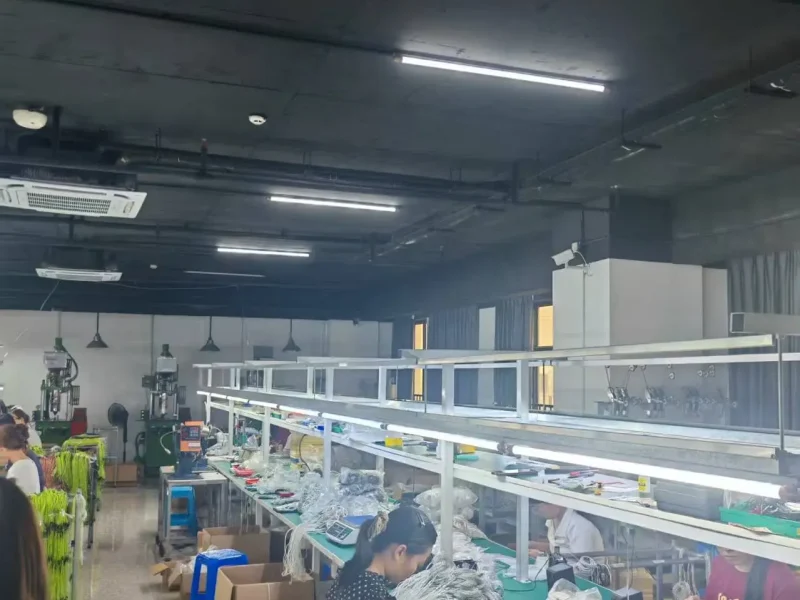
Most people see a finished cable and judge it by its jacket color or connector plating. But the real quality is decided long before the product reaches the shelf — in the design room, on the production floor, and during final testing.
As a manufacturer, we’ve learned that a cable is only as good as its weakest point. A single cold solder joint, an uneven braid, or a misaligned connector can undo months of engineering work. That’s why we treat every step of the process with the same level of attention.
Here’s how we build a premium audio cable from start to finish.
1. Design Phase: Defining the Purpose Before Cutting a Single Wire
Every cable starts with a question: who is this for, and what problem does it solve?
A cable designed for a stage performer has completely different requirements from one built for a desktop audiophile. The performer needs tangle resistance, high tensile strength, and reliable shielding against stage lighting interference. The audiophile prioritizes low microphonics, clean signal transmission, and a comfortable feel during long listening sessions.
We define the electrical parameters first — conductor gauge, impedance target, shielding coverage — then work backward to the physical design. This is where we decide on braid pattern, jacket material, and connector type. The appearance is never an afterthought; it’s part of the engineering brief.
2. Material Selection: Where Performance Begins
The conductor is the heart of the cable. We work with several grades depending on the target application:
- OFC (Oxygen-Free Copper): The baseline for reliable audio transmission. Good conductivity, stable performance, cost-effective for mid-range products.
- OCC (Ohno Continuous Casting) Copper: Single-crystal structure with virtually no grain boundaries. This reduces signal distortion at the microscopic level and is our go-to for premium lines.
- Silver-Plated Copper: Silver conducts better at high frequencies due to the skin effect. Plating copper with silver gives you high-frequency clarity without the full cost of solid silver.
The insulation and jacket materials matter just as much. We commonly use TPE for flexibility, PVC for durability, and braided nylon for a premium tactile feel. Each material has trade-offs in flexibility, abrasion resistance, and aging behavior.
If you’re interested in our OCC silver-plated conductor options, you can check the details here: [OCC Silver-Plated IEM Cable].
3. Manufacturing: Braiding, Soldering, and Assembly
This is where engineering meets craftsmanship.
Braiding is done on specialized machines that control strand count, tension, and pitch. A 4-strand braid is flexible and smooth; an 8-strand braid is denser, more durable, and visually distinctive. The braid isn’t just cosmetic — it distributes mechanical stress across multiple strands, which improves fatigue resistance during repeated bending.
Soldering is the most critical manual step. A good solder joint should be smooth, shiny, and fully wetted. A cold joint looks dull and grainy — it may pass a basic continuity test but will fail under real-world vibration and temperature changes. Our technicians inspect every joint under magnification.
Shielding is applied after the conductors are assembled. We use a combination of aluminum foil and braided copper mesh, with coverage rates typically above 85%. This blocks electromagnetic interference from power supplies, routers, and other environmental noise sources.
4. Quality Control: Testing Every Single Unit
We don’t do batch sampling. Every cable that leaves our factory goes through 100% electrical testing.
Our QC process includes:
- Continuity test: Verifies that every conductor path is complete and correctly mapped.
- Insulation resistance test: Ensures no short circuits between conductors.
- Bend/flex test: Simulates months of real-world handling to catch weak points before shipment.
- Audio signal test: Checks for channel imbalance, noise, and distortion.
- Visual inspection: Connector alignment, braid consistency, jacket finish, and labeling accuracy.
If a unit fails any one of these checks, it doesn’t ship. Period.
5. Packaging and Delivery
For brand clients, packaging is part of the product experience. We offer custom packaging solutions — from retail boxes with branded inserts to minimalist bulk packaging for OEM distribution. Every order is packed with protective materials to prevent damage during transit, and we provide full documentation including test reports and compliance certificates.
For brands looking for a balanced plug solution to pair with their cable lineup, here’s an option worth considering: [4.4mm Balanced Plug Cable].
Q&A
Q: How long does it take to produce a custom cable order?
A: For standard configurations with materials in stock, sample production typically takes 3–7 days. Bulk orders usually run 2–6 weeks depending on quantity and complexity. Custom materials or special certifications will add time.
Q: What’s the minimum order quantity?
A: It depends on the level of customization. Standard configurations can accommodate smaller batches. Fully custom designs — unique braid patterns, custom connectors, branded packaging — require higher MOQs to cover setup costs. Contact us with your specs for a precise quote.
Q: Can you match a specific braid pattern or color we’ve seen on another brand’s cable?
A: Yes. We can replicate or adapt braid patterns, colors, and textures. If you provide a reference sample or image, our engineering team can match it closely or suggest improvements based on manufacturability.
Q: Do you provide test reports with each shipment?
A: Yes. We include electrical test data for each batch. For clients who require it, we can also provide material certifications and compliance documents (RoHS, REACH, etc.).
Q: What’s the most common cause of cable failure you see in the field?
A: Connector strain. When the cable bends sharply right at the connector base, the solder joints fatigue over time. This is why we pay extra attention to strain relief design — both in the internal structure and the external boot.
Related Reads:Custom Braided Audio Cables: Litz & Ergonomic Design
Bluetooth IEM Adapters: The Wireless Alternative to Balanced Cables