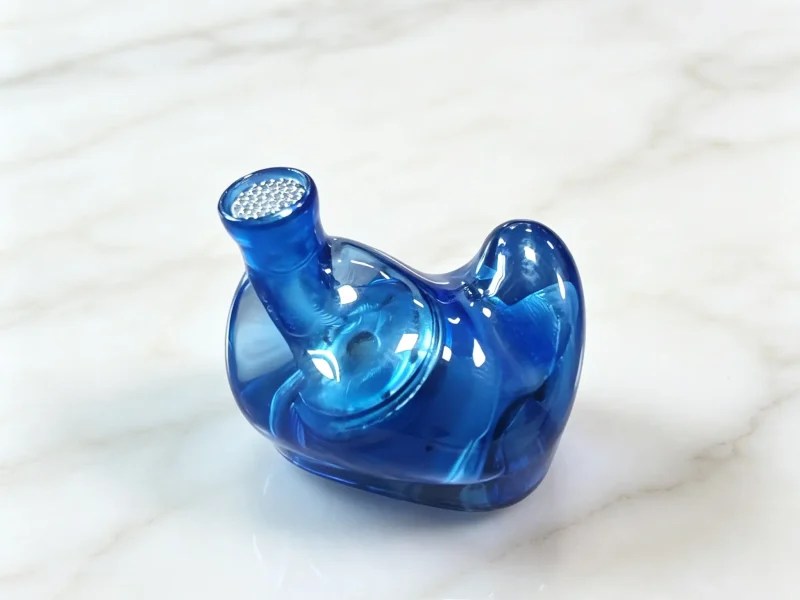
1DD+3BA is a practical upgrade step for custom IEM brands that want more vocal clarity and instrument separation without moving into high-complexity flagship territory. The dynamic driver maintains natural bass weight, while three balanced armature drivers improve midrange definition, upper-mid presence, and high-frequency detail.
For buyers evaluating OEM In-Ear Monitors, this configuration is often used when a 1DD+2BA model feels too warm or too full, and the brand needs a clearer, more articulate sound for vocal-focused users.
Why 1DD+3BA Is a Useful Mid-Range Tier
In a 1DD+3BA layout, the dynamic driver usually handles bass and lower mids. The three balanced armature drivers are typically assigned to low-mid/midrange, upper-mid/vocal presence, and treble detail.
This gives the tuning team more control over the vocal region. The result is often:
- clearer lead vocals;
- better separation between voice and instruments;
- more definition in acoustic guitars, keyboards, and percussion;
- smoother treble extension than simpler dual-driver designs;
- enough bass support to avoid a thin or clinical sound.
For ODM IEMs programs, 1DD+3BA is a good way to create a “step-up” model above the entry hybrid tier without jumping directly to a costly 4BA or 5BA flagship.
What Changes Compared with 1DD+2BA
The main difference is control in the mids and upper mids.
A 1DD+2BA design can already sound balanced, but the midrange is usually shared between fewer balanced armature drivers. With 1DD+3BA, the tuning has more room to separate vocal presence, instrument body, and treble air.
In practical terms, 1DD+3BA often sounds more open and articulate. It can make lead vocals easier to place in the mix, which is useful for singers, worship leaders, presenters, and musicians who rely on clear cue monitoring.
Manufacturing Considerations for OEM Programs
From a factory standpoint, 1DD+3BA is more complex than 1DD+2BA, but still manageable. The crossover network has more bands, the internal cavity needs more careful routing, and driver matching becomes more important.
This is where production experience matters. A 1DD+3BA design can sound excellent on paper, but if the crossover is inconsistent or the acoustic tubes are poorly arranged, the result may be uneven vocal focus, harsh upper mids, or batch-to-batch variation.
As a China factory producing custom monitoring earphones, we treat 1DD+3BA as a mid-to-upper tier platform. It requires tighter quality control than 1DD+2BA, but it does not yet carry the full cost and assembly risk of higher-driver hybrid designs.
Fit and Isolation Still Define the Result
No driver configuration can fix a poor seal. If the shell leaks, bass response weakens, isolation drops, and users may raise the volume to compensate. That affects both listening comfort and safety.
For brands preparing custom IEM orders, accurate impressions are part of product quality, not an afterthought. Using consistent [Custom Ear Impression Kit] helps reduce remake rates and supports more reliable first-fit outcomes.
Filter Options for Different User Groups
1DD+3BA can be tuned for different markets by changing filters and target curves. A standard filter setup works well for general stage monitoring. Higher-attenuation options can support users in louder environments who need more passive noise reduction.
For product line planning, [High-Attenuation Acoustic Filters] allow brands to create a monitoring version and a high-isolation version from the same core driver platform. This keeps development efficient while giving dealers and end users a clearer choice.
Who Should Choose 1DD+3BA?
This configuration is suitable for:
- lead vocalists who need clear self-monitoring;
- worship teams and church musicians;
- studio musicians who want better instrument separation;
- presenters and broadcasters who need intelligibility;
- brands building a mid-range custom IEM line;
- buyers who want more clarity than 1DD+2BA without flagship complexity.
It is not always the lowest-cost option, but it offers a meaningful upgrade in vocal clarity and detail retrieval.
Q&A
Q: Is 1DD+3BA better than 1DD+2BA?
It depends on the tuning goal. 1DD+3BA usually offers more control over vocals and upper mids. 1DD+2BA may be more cost-effective and simpler to produce.
Q: Is 1DD+3BA suitable for stage monitoring?
Yes. It works well for performers who need clear vocals and good instrument separation. Fit, isolation, and filter selection should still be reviewed for loud stage environments.
Q: Does 1DD+3BA improve hearing protection?
Not automatically. Better clarity and isolation can support lower listening levels, but hearing safety depends on fit, attenuation, and volume control.
Q: Can 1DD+3BA be used in ODM IEMs programs?
Yes. It is a strong mid-tier option for brands that want a clear upgrade above entry hybrid models without launching a full flagship configuration.
Q: What should buyers check before approving 1DD+3BA production?
Check crossover consistency, driver matching, cavity layout, impedance curve, sensitivity, filter options, and batch sampling before mass production.
Related Reads:The Sweet Spot: Why 1DD+2BA Is the OEM IEMs Workhorse
Are More Drivers Always Better in Custom IEMs? Custom IEMs for Industrial and Outdoor Use