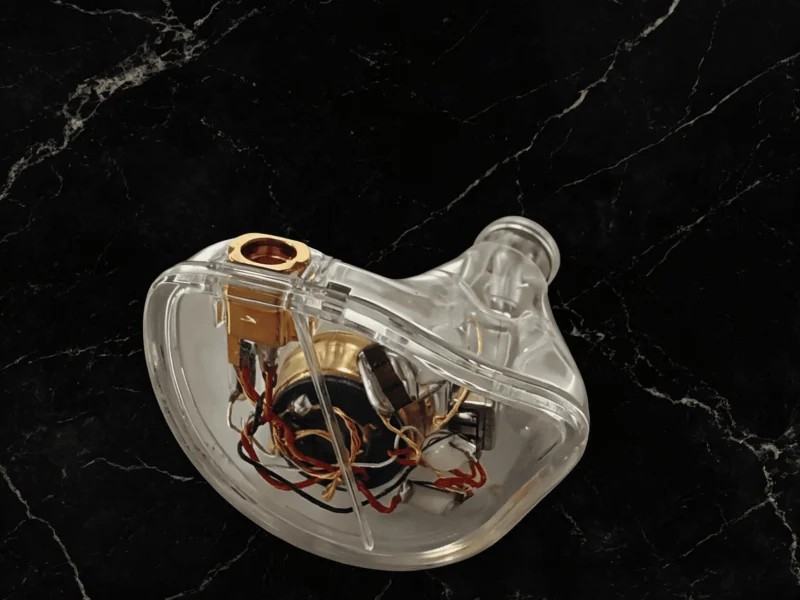
If a brand is building its first serious custom IEM line, the 1DD+2BA configuration is usually the safest place to start. It is not the highest driver count on the market, but it is one of the most balanced. It combines the natural low-frequency response of a dynamic driver with the clarity and detail of two balanced armature drivers.
For buyers sourcing OEM In-Ear Monitors, this configuration offers a practical mix of performance, manufacturability, and price. It sits above entry-level single or dual driver models, yet it avoids the cost and complexity of flagship multi-driver designs. That is why many ODM IEMs programs begin here.
Why 1DD+2BA Works as a Core Model
The strength of 1DD+2BA is balance. The dynamic driver handles bass and lower mids, giving the sound body, warmth, and stage presence. The two balanced armature drivers usually cover mids and highs, improving vocal clarity, instrument separation, and perceived detail.
This matters because most end users do not need extreme frequency separation. They need a monitor that sounds full, clear, and consistent across different genres and environments. A 1DD+2BA design can deliver that without forcing the brand into an ultra-premium price tier.
A Realistic Choice for OEM In-Ear Monitors
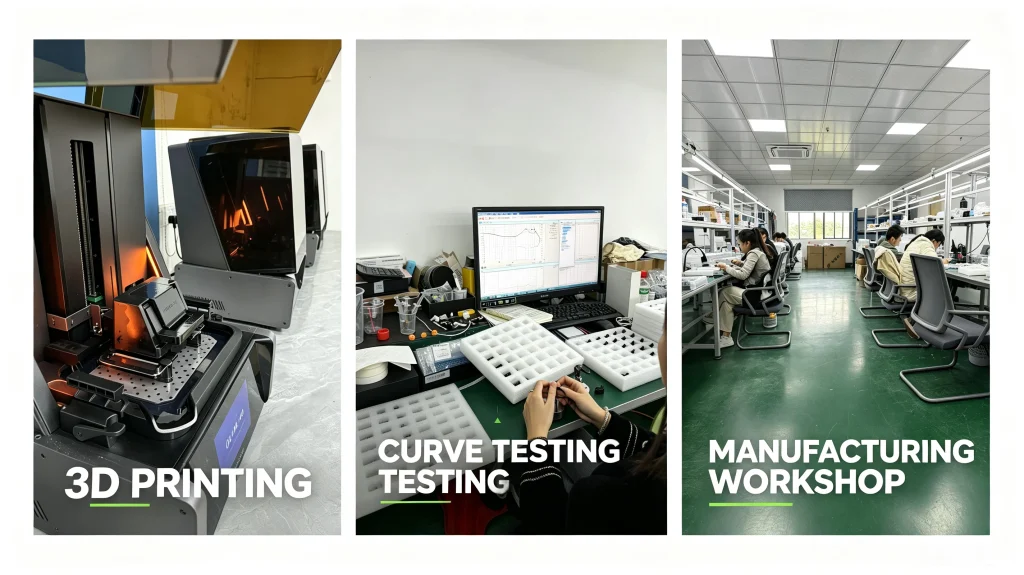
From a manufacturing perspective, 1DD+2BA is a stable configuration. The cavity layout is well understood, the crossover network is manageable, and the assembly process can be controlled with good consistency. That makes it suitable for brands that need repeatable quality across batches.
As a China factory working with international audio brands, we see this configuration perform well across different markets. It is flexible enough for stage monitoring, worship teams, rehearsal use, content creation, and entry-level audiophile listening. For brands launching OEM In-Ear Monitors, it provides a clear step up from basic models while keeping risk under control.
Why It Also Fits ODM IEMs Programs
For buyers who want a ready-to-launch product rather than a fully custom acoustic development, 1DD+2BA is often the most efficient starting point. The tuning direction can be adjusted toward vocal-forward monitoring, balanced performance, or slightly warmer consumer sound, depending on the target audience.
This is where ODM IEMs programs become attractive. Brands can choose shell styles, faceplate designs, cable options, filter attenuation, and packaging without rebuilding the entire acoustic platform from scratch. It shortens development time and makes it easier to test the market before committing to higher-driver flagships.
Fit and Isolation Still Come First
No driver configuration can compensate for a poor seal. If the shell does not fit well, bass leaks out, isolation drops, and users raise the volume to compensate. That reduces both performance and listening safety.
Accurate ear impressions remain the foundation of custom IEM quality. Using reliable [Custom Ear Impression Kits] helps brands reduce remake rates and improve first-fit satisfaction, especially when scaling from small batches to larger orders.
Tuning, Filters, and Long-Term Use
A 1DD+2BA design does not need an overly complex crossover, but it still requires careful tuning. The transition between the dynamic driver and the balanced armature drivers must be smooth. If the crossover is poorly designed, the mids can sound recessed or the highs can become fatiguing.
Filter choice also matters. Standard acoustic filters work well for general monitoring, while higher-attenuation options can support users who need more passive noise reduction in loud environments. Our [High-Attenuation Acoustic Filters] can be integrated into 1DD+2BA shells to create different product tiers without changing the core driver layout.
Who Is 1DD+2BA Best For?
This configuration suits:
- musicians who need clear vocals and solid bass;
- worship bands and live performers;
- DJs and mobile performers;
- content creators and home studio users;
- brands launching a mid-range custom IEM line;
- buyers who want better performance than entry-level models without flagship pricing.
It is not necessarily the final destination for every brand. But it is one of the most reliable foundations for building a scalable product range.
Q&A
Q: Is 1DD+2BA better than a pure 3BA design?
Not always. A pure 3BA design can offer faster transient response and higher sensitivity. 1DD+2BA usually provides fuller bass and a more natural low-end feel. The better choice depends on tuning goals and user preference.
Q: Can 1DD+2BA be used for professional stage monitoring?
Yes. It is widely used by performers who need clear mids, controlled highs, and reliable bass. For very loud stages, fit and filter selection should be reviewed carefully.
Q: Why do many brands start with this configuration?
Because it balances cost, performance, and production stability. It is easier to tune consistently than higher-driver designs, yet it sounds more complete than entry-level single or dual driver IEMs.
Q: Does 1DD+2BA protect hearing?
It can support safer listening by improving isolation and clarity, but it is not automatically certified hearing protection. Hearing safety depends on fit, attenuation, and listening level.
Q: Can this configuration be customized for different markets?
Yes. The same 1DD+2BA platform can be tuned differently for vocal-heavy monitoring, balanced consumer sound, or bass-forward performance, making it suitable for both OEM In-Ear Monitors and ODM IEMs programs.
Related Reads:Are More Drivers Always Better in Custom IEMs?
Custom IEMs for Industrial and Outdoor Use Custom IEMs for Musicians: Monitoring and Hearing Safety