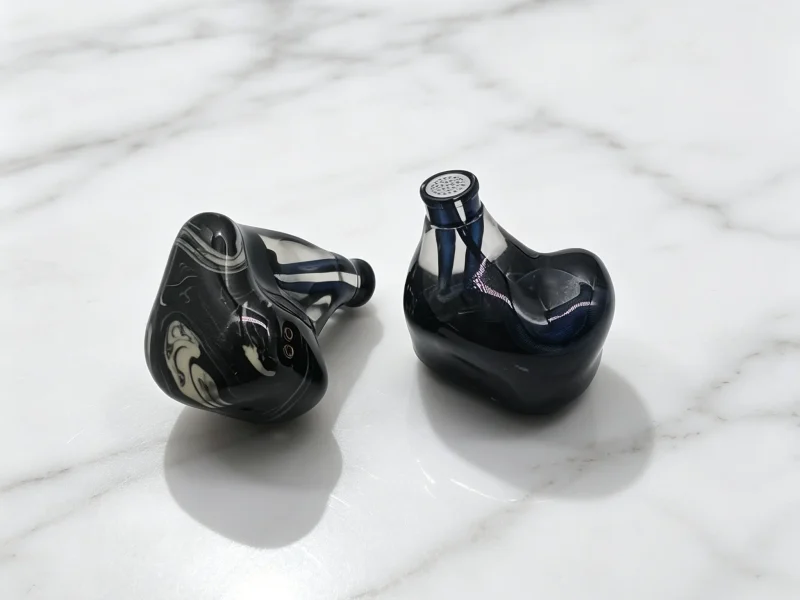
Custom in-ear monitors serve a dual purpose: delivering a clean stage mix while simultaneously blocking harmful stage volume. However, from a manufacturing perspective, a custom IEM is not a substitute for certified industrial PPE. Instead, it effectively lowers exposure risk only when the shell fit is precise, the filters are calibrated correctly, and the musician maintains a safe mix volume.
From a manufacturing side, the safety benefit does not come from branding or driver count. It comes from isolation, filter behavior, and how the musician actually uses the system.
Why Custom Fit Matters for Safe Monitoring
Universal IEMs often suffice for rehearsals, but they rarely match the seal consistency of a true custom shell. Because a custom shell precisely contours to the ear canal and concha, it physically blocks ambient noise before it reaches the eardrum. Consequently, this superior isolation prevents the “occlusion effect” and stops performers from cranking up the volume to overcome background noise.
Properly fitted custom IEMs can provide meaningful passive isolation, often in the range of 20–30 dB depending on fit, material, and venting. That isolation helps musicians hear their mix more clearly at lower SPL. The problem appears when the seal is weak: low frequencies leak first, and the performer compensates by turning the mix up.
For brands sourcing from OEM factories, the impression quality and shell tolerance are not cosmetic details. They directly affect how much real-world protection the musician receives. Our [Custom Ear Impression Kits] help brands reduce fit-related returns by improving the accuracy of the first shell cast.
Monitoring Clarity vs. Hearing Protection
Custom IEMs are primarily monitoring tools. They are designed to deliver a controlled audio signal, not to function as industrial earplugs. That distinction matters.
A musician can still expose themselves to unsafe levels if:
- the beltpack output is set too high;
- only one earpiece is worn;
- the mix is used to “overpower” stage volume instead of replacing it;
- the filters or vents are mismatched to the environment.
The safest monitoring setup keeps isolation high and mix level moderate. Many performers benefit from flat-attenuation filters such as 9 dB, 15 dB, or 25 dB, because they reduce volume without making the mix sound muffled. Our [High-Attenuation Acoustic Filters] allow brands to offer different attenuation levels without changing the entire shell design.
What Makes a Custom IEM Safer in Practice
Several build choices influence hearing safety more than marketing copy suggests.
- Seal consistency: A repeatable shell shape keeps isolation stable across performances.
- Filter selection: The right attenuation level depends on the instrument and stage SPL.
- Venting: Vented designs improve comfort and ambient awareness but reduce isolation.
- Driver efficiency: Efficient drivers help musicians hear detail without excessive SPL.
- Ambient options: Passive ambient ports or ambient mics can prevent the “one ear out” habit, which often makes the other ear louder and less protected.
Common Mistakes That Reduce Hearing Safety
Even a well-made custom IEM can fail if it is used poorly.
- Wearing only one earpiece. This usually pushes the open ear into unprotected exposure and makes the closed ear louder.
- Using IEMs to block everything, then turning the mix up. Isolation should lower the required mix level, not justify higher output.
- Ignoring filter replacement. Clogged filters change attenuation and frequency response.
- Assuming “custom” means certified protection. Most music IEMs are not ANSI/CE-rated PPE.
- Skipping sound-check calibration. A mix that feels comfortable in rehearsal may be too loud on a louder stage.
Q&A
Q: Can custom IEMs replace earplugs for musicians?
Not automatically. Custom IEMs provide passive isolation and controlled monitoring, but they are not certified hearing protection unless tested and labeled as such. For many musicians, they reduce exposure risk when used at moderate mix levels.
Q: Which attenuation filter is best for stage use?
It depends on the environment. Around 15 dB is a common starting point for band rehearsals and live performance. Drummers, brass players, and loud amplified stages may need 25 dB. Acoustic or lower-volume settings may suit 9 dB.
Q: Does wearing one IEM make monitoring safer?
No. Wearing one earpiece usually reduces perceived loudness by roughly 6 dB, which leads many performers to raise the volume. It also leaves one ear unprotected.
Q: Can a brand offer both monitoring and hearing-safety positioning?
Yes, but the wording should be careful. “Hearing safety” should be tied to isolation, filter options, and safe listening practices, not presented as a certified PPE claim.
Q: What should OEM buyers check before launching a musician IEM line?
Check shell material stability, filter accuracy, vent design, cable strain relief, and whether the product will be marketed as monitoring equipment or hearing protection. Those decisions affect both performance and liability.
Related Reads:Custom IEMs: Can They Be Used for Hearing Protection?
Why Work With a China OEM IEM Manufacturer? Call Center IEMs & Business Headsets for High-Volume Voice Communication