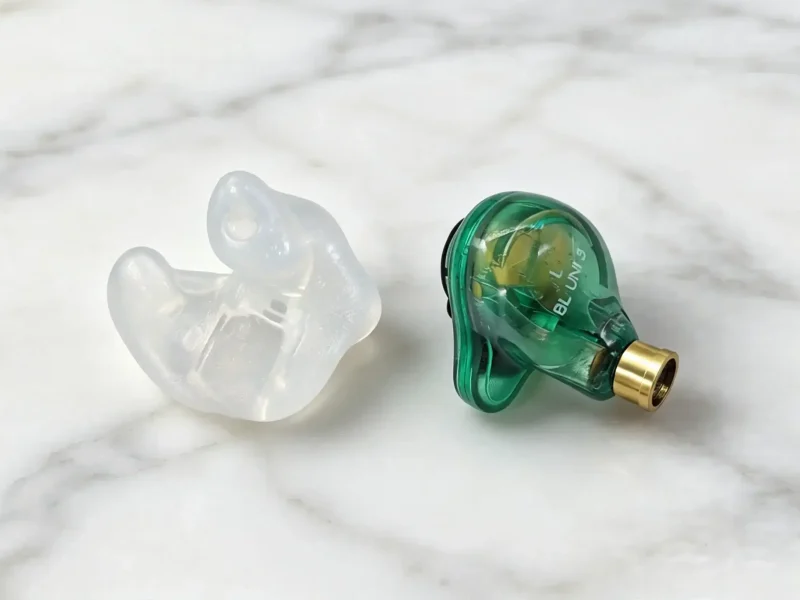
For many audio enthusiasts, the journey into high-fidelity sound eventually leads to a specific term: Custom IEM. Unlike standard earbuds that come in “one-size-fits-all” packaging, these devices represent a fundamental shift in how we think about personal audio. They aren’t just manufactured; they are crafted around the unique anatomy of your ear. But beyond the exclusivity, there is a genuine scientific reason why this approach has become the gold standard for professionals and audiophiles alike.
Beyond the Mold: The Anatomy of a Perfect Fit
The process begins long before any sound is produced. It starts with the ear impression, a step that bridges the gap between medical precision and acoustic engineering. When an audiologist takes an impression, they aren’t just making a cast of your ear canal. They are capturing a dynamic map of your anatomy.
A critical, often overlooked detail is the use of cotton dams and bite blocks. The cotton dam protects the eardrum from the impression material, while the bite block ensures the jaw is in a neutral position. This is vital because the shape of the ear canal changes slightly when you open your mouth or chew. A proper custom IEM manufacturer accounts for these micro-movements to ensure the final product doesn’t pop out during a performance or cause fatigue after an hour of listening.
The Acoustic Advantage: Why Seal Matters
Once the physical shell is created—often using 3D scanning technology to digitize the analog impression—the focus shifts to acoustics. The primary benefit of a custom fit isn’t just comfort; it’s the creation of a perfect acoustic seal.
In standard earphones, even the best silicone tips can leave microscopic gaps. These gaps cause “leakage,” particularly in the low frequencies. Bass waves are long and energetic; if they aren’t contained, they escape before reaching the eardrum, resulting in thin, weak sound. A custom IEM eliminates this variable entirely. By filling the concha and canal precisely, the shell acts as an extension of the ear itself, ensuring that every decibel of bass pressure is delivered exactly as the tuner intended. This also provides superior passive noise isolation, often blocking out 25dB to 30dB of ambient noise without needing active electronics.
Engineering Constraints: Driver Selection and Shell Design
Designing for a custom shell presents unique challenges compared to universal models. The internal volume of an ear canal is incredibly small and irregular. This physical restriction is why many custom IEM designs favor Balanced Armature (BA) drivers over traditional dynamic drivers.
BA drivers are significantly smaller and more power-efficient. Their compact size allows engineers to fit multiple drivers—dedicated woofers, midranges, and tweeters—into the narrow confines of a custom shell without making the device protrude awkwardly from the ear. While dynamic drivers are prized for their natural timbre, fitting them into a custom mold often requires complex venting systems and larger shells, which can compromise the discreet profile that many users desire. However, hybrid designs that combine both technologies are becoming increasingly common as manufacturing tolerances improve.
Frequently Asked Questions About Custom IEMs
Q1: How long does it typically take to receive a pair of custom IEMs?
Typically, the process takes 2 to 4 weeks. This timeline involves shipping the physical impression to the custom IEM manufacturer, performing high-resolution 3D scanning, making CAD design adjustments, manual resin casting, precise driver installation, and final acoustic testing. The exact duration varies based on the factory’s current queue and the complexity of the requested shell design or faceplate art.
Q2: Can custom IEMs be repaired or refitted if my ear shape changes?
Minor fit issues can sometimes be resolved by adding UV-cured resin to the existing shell to fill small gaps. However, significant anatomical changes—due to weight loss, gain, or aging—usually require taking a new ear impression and manufacturing a completely new set. Because the acoustic seal is highly dependent on precise physical matching, a poor fit cannot simply be “fixed” without compromising sound quality or comfort.
Q3: Why do custom IEMs often use balanced armature drivers instead of dynamic drivers?
The physical space inside a custom ear canal is highly restricted. Balanced Armature (BA) drivers are significantly smaller and more power-efficient than dynamic drivers. This allows manufacturers to fit multiple drivers (for bass, mids, and treble) into the narrow custom shell while maintaining a comfortable, deep insertion depth. Dynamic drivers, while excellent for bass texture, generally require more internal volume and complex venting, making them harder to implement in ultra-compact custom designs.This multi-driver architecture isn’t exclusive to customs anymore. For a prime example of how advanced driver configuration delivers clarity in a universal form factor, take a listen to the [Blseeker 3-Driver Balanced IEM]. It utilizes similar acoustic principles to deliver a layered soundstage typically reserved for high-end monitors.
Conclusion
Investing in a custom IEM is an investment in precision. It removes the variables of tip rolling and fit adjustment, leaving you with a pure, consistent listening experience tailored specifically to your biology. Whether you are a stage performer needing reliable monitoring or an audiophile seeking the last 5% of performance, understanding the science behind the mold helps appreciate why this path is truly unique.
Explore Our Audio Guides:
[What Are IEM and CIEM Earphones? Why Audiophiles Prefer Custom IEM Factory Products?]
[What are the different types of IEMs (dynamic, armature, hybrid)?]