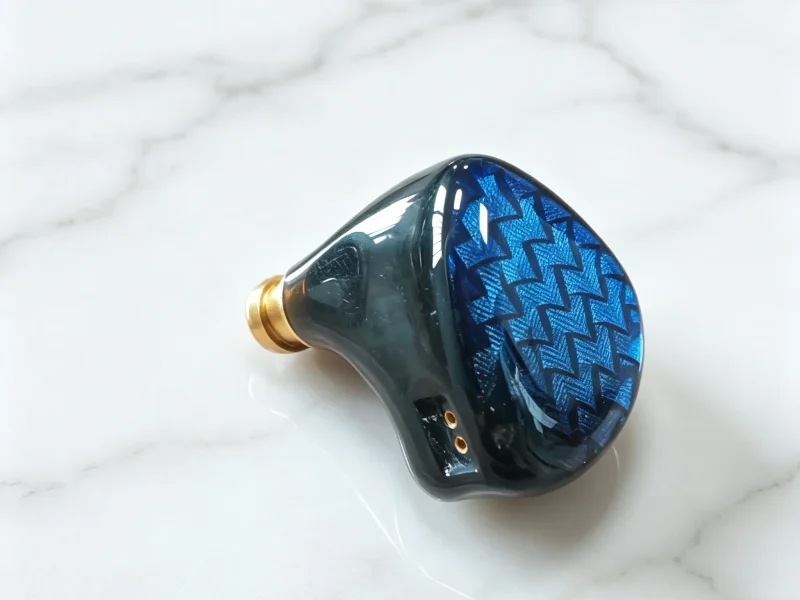
Working with a China OEM IEM manufacturer is not automatically cheaper or faster. The real benefit comes from having a complete production chain in one place: driver sourcing, shell fabrication, cable assembly, tuning support, QC, and packaging.
For audio brands, the question is not just whether a factory can assemble an IEM. It is whether the factory can keep specifications stable across batches, handle design changes without delaying the schedule, and reduce the number of suppliers a brand has to manage.
This is where a China-based OEM setup usually creates practical advantages.
One Supply Chain, Fewer Coordination Risks
IEM production involves multiple stages. Drivers, crossover components, shells, nozzles, cables, connectors, packaging, and manuals all need to align. If these parts come from separate suppliers, the brand often becomes the coordinator.
A China OEM manufacturer that controls more stages internally can reduce that burden. When shell production, cable assembly, and final QC sit under one production workflow, specification changes can be handled faster and with fewer communication gaps.
Faster Prototyping and Design Iteration
IEM development usually requires several prototype rounds. A brand may need to adjust shell fit, nozzle length, driver configuration, cable strain relief, or packaging layout.
When prototyping, assembly, and testing are handled by the same team, feedback loops are shorter. Engineering can check a physical sample, confirm whether a change is feasible, and return a revised prototype without routing requests through multiple vendors.
This matters most for brands launching new models or updating existing ones on tight timelines.
Flexible MOQs for New and Growing Brands
Not every brand starts with large orders. Some are testing a new product line. Others are launching a limited edition. Some need small batches before committing to full production.
A China OEM IEM manufacturer with experience in both small-batch and mass production can offer more flexible entry points. The factory can help a brand validate design, packaging, and market response before scaling up.
Our [Custom IEM Cable OEM] service supports brands that need matched cable specifications across different IEM models, connector types, and packaging requirements.
Cost Efficiency Without Removing Quality Control
Cost efficiency does not mean removing inspection steps. In IEM manufacturing, skipping QC to reduce cost usually creates higher return and rework rates later.
The advantage of an experienced OEM factory is that it can control cost through process stability rather than reduced testing. Standardized assembly steps, consistent soldering procedures, and repeatable acoustic checks help keep unit cost predictable while maintaining reliability.
Access to Complete IEM Components
Brands often need more than a finished IEM. They may require replacement shells, nozzles, cables, connectors, packaging inserts, or accessory kits.
Sourcing these from one manufacturer reduces the risk of mismatched tolerances. A connector that fits one shell may not fit another if dimensions are not coordinated. When shells, cables, and connectors are developed within the same workflow, compatibility issues are easier to prevent.
Our [IEM Connector & Accessory Supply] line supports brands that need stable connector performance, matched strain relief, and consistent accessory quality across production batches.
Easier Scaling From Prototype to Mass Production
A factory that handles both prototyping and mass production can carry process knowledge from one stage to the next. The team already knows where assembly issues appear, which tolerances are critical, and which design changes may affect yield.
This reduces the learning curve when a project moves from sample confirmation to full production. It also helps brands avoid surprises such as unexpected rework, delayed shipments, or inconsistent finish quality.
What to Check Before Choosing a China OEM Partner
Not every manufacturer offers the same capability. Before placing an order, brands should confirm:
- Whether the factory handles shell, cable, assembly, and QC internally
- How prototypes are reviewed and revised
- Whether QC standards are documented, not only
- How defects are handled during mass production
- Whether the factory can support accessory and packaging coordination
- How communication is managed across time zones and languages
The goal is not to find the cheapest quote. The goal is to find a production partner that can deliver consistent units at the volume you need.
Q&A
Q: Is working with a China OEM IEM manufacturer only about lower cost?
A: No. Cost efficiency is one factor, but the bigger advantage is supply chain integration. When shells, cables, assembly, and QC are coordinated by one team, brands spend less time managing multiple suppliers.
Q: Can a China OEM factory support small orders?
A: Many can, especially if they have experience with both prototyping and mass production. Brands should confirm MOQ, lead time, and whether small-batch pricing differs from mass-production pricing.
Q: Does OEM mean the factory owns the design?
A: Not necessarily. In an OEM arrangement, the brand usually provides or approves the design, specifications, and branding. The factory manufactures according to those requirements. Clear documentation and agreements should define ownership before production begins.
Q: How does a single factory reduce coordination risk?
A: When more steps are handled internally, specification changes do not need to pass through multiple suppliers. This shortens feedback loops and reduces the chance of mismatched components.