Call centers rely on voice clarity for eight or more hours daily. Standard consumer earphones cannot handle this duty cycle. Generic headsets also fail to meet the most critical requirement: consistent voice pickup throughout a full shift, regardless of office noise. Call center IEMs and business headsets solve this specific problem. Manufacturers engineer these devices specifically for professional communication, rather than adapting consumer audio lines.
The Core Requirements: Call Clarity, All-Day Comfort, and Durability
Three requirements drive specification decisions for call center and corporate communication equipment, and they rank in a different order than consumer audio products.
Call clarity comes first. Agents must transmit their voices clearly to callers and hear responses consistently. Background noise from a busy floor—such as other agents talking or general office ambience—creates interference. The microphone must reject this noise at the source, not filter it after the fact.
All-day comfort comes second. An eight-hour shift wearing the same headset means fit fatigue, ear pressure, and heat buildup are real operational concerns, not minor details. Durability comes third. Equipment used daily by shift-based staff needs to withstand repeated donning and removal, cable handling, and extended duty cycles without failing within a normal replacement window.
Universal-Fit Custom IEM Design for Call Center Use
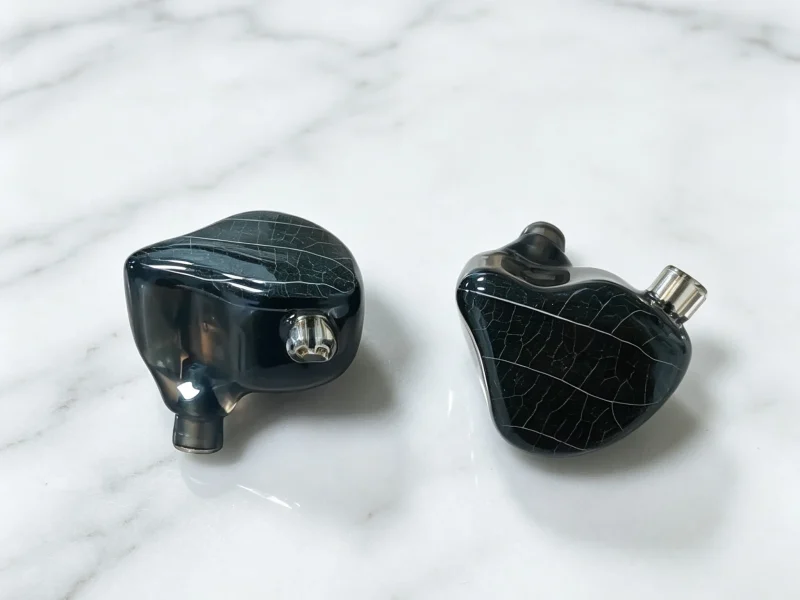
This is universal-fit custom IEM design, engineered for consistent fit across a defined range of ear anatomy — not individual custom-moulded CIEMs built from personal ear impressions. Universal-fit design supports standardised procurement, predictable lead times, and consistent specification across large agent rosters, which is what call center and BPO facility buyers actually need when equipping hundreds or thousands of workstations.
Shell geometry for this application prioritises stable retention during normal desk-based movement, comfortable extended wear across full shift lengths, and a consistent seal that supports reliable voice pickup positioning relative to the microphone boom. The design priority is dependable, repeatable performance across a large and varied workforce, not anatomical precision for a single wearer.
Microphone Engineering: Why Independent Boom Mics and Unidirectional Capsules Matter
Microphone selection is the single most consequential engineering decision for call center headset performance, and it deserves specific attention.
An independent boom microphone mounts on an adjustable arm separate from the earpiece. This design positions the mic capsule close to the mouth, regardless of how the earpiece sits in the ear. Consistent positioning matters. Voice quality degrades quickly as microphone distance increases. A fixed in-line microphone cannot adjust to correct for this distance.
Capsule directionality matters as much as positioning. A unidirectional (single-directional) mic capsule picks up sound primarily from one direction: the wearer’s mouth. It rejects sound from other directions, including ambient noise on a busy call floor. This is a deliberate engineering trade-off. The capsule sacrifices sensitivity to side angles to achieve better background noise rejection. In contrast, an omnidirectional capsule picks up sound evenly from all directions. It captures the exact floor noise that a unidirectional design rejects.
Confirm boom arm adjustability and capsule directionality during specification. Do not assume these features based on a general “noise-cancelling” label. The industry uses that term loosely without a consistent technical meaning.
Explore our Call Center IEMs for crystal clear voice and superior noise rejection.
Ergonomics and Fit Stability for Long Shifts
Fit stability over an eight-hour shift is a different engineering problem than fit stability during a short call or casual use. Pressure points that go unnoticed in the first hour become a real discomfort issue by hour six, and a headset agents want to remove partway through a shift creates both a comfort complaint and a communication gap.
Shell weight and contact pressure distribution need to be balanced to avoid concentrated pressure points against the ear over extended wear. Multiple ear tip or ear-hook sizing options account for the reality that a single fit configuration won’t work comfortably across an entire agent population. Boom arm weight also factors into overall comfort, since a heavier microphone assembly shifts the balance point of the whole headset and can contribute to fatigue if not accounted for in the shell’s overall weight distribution.
OEM/ODM Customisation for Corporate Brands
Headset and communication equipment brands sourcing through OEM/ODM channels typically need customisation beyond a stock universal-fit shell. Custom models can be developed around specific UC platform requirements, connector types matching existing desk phone or softphone hardware, boom microphone length and capsule specification tailored to a facility’s noise profile, and branding requirements for corporate or distributor product lines.
Colour matching, logo placement, and packaging design are available alongside these functional specifications, but connector compatibility and microphone specification should be confirmed first, since they determine whether a unit will actually integrate with a buyer’s existing communication infrastructure.
Request OEM/ODM business headsets for your brand, team, or distribution channel.
MOQ and Sourcing Notes
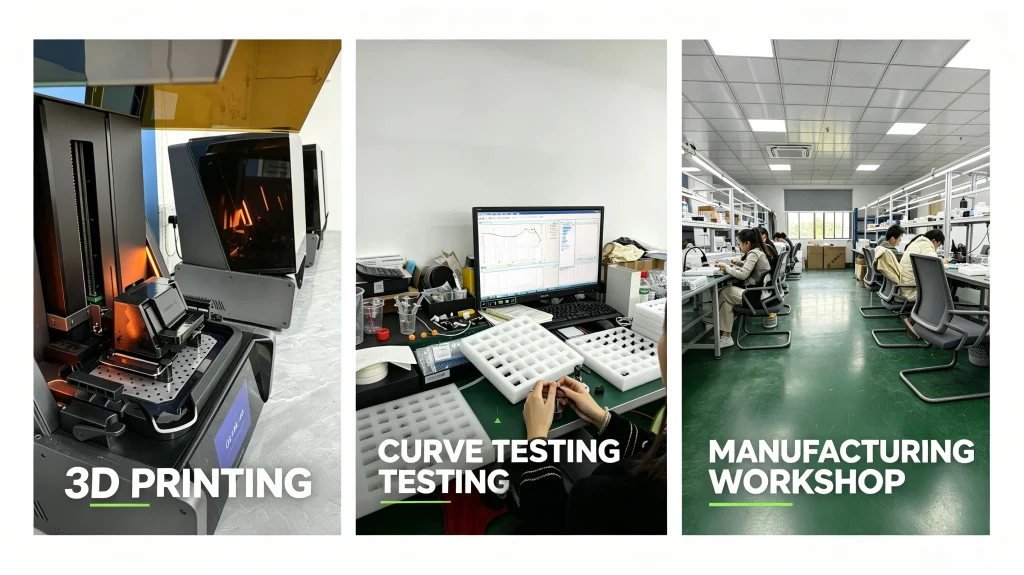
MOQ for call center and corporate OEM orders depends on connector type, boom microphone specification, and branding requirements. Buyers should expect a specification and sample approval process before a production order is confirmed, particularly for projects requiring compatibility with a specific UC platform or existing desk phone infrastructure. Lead times scale with customisation level — a standard universal-fit shell using existing connector and microphone options moves through production faster than a fully custom build developed around a specific corporate communication system.
Q&A
Is this a custom-moulded product requiring ear impressions?
No. This is universal-fit custom IEM design, engineered for consistent fit across a defined population range and suited to standardised B2B procurement for large agent rosters, not individual ear-impression CIEMs.
Why does an independent boom microphone matter compared to a fixed in-line mic?
An independent boom mic can be positioned close to the mouth regardless of how the earpiece sits, maintaining consistent voice pickup quality. A fixed in-line microphone can’t be repositioned to correct for distance, which affects pickup consistency across different wearers.
What does a unidirectional mic capsule actually do?
It picks up sound primarily from the wearer’s mouth while rejecting sound from other directions, including general call floor noise. This trades some off-axis sensitivity for meaningfully better background noise rejection, which suits high-noise call center environments.
Can these be built to work with our existing UC platform or desk phone system?
Yes. Connector type and cable configuration can be specified to match existing UC platforms, softphone systems, or desk phone hardware. Confirm your system’s connector standard during specification.
What is the typical MOQ for a call center OEM order?
MOQ depends on connector type, boom microphone specification, and branding requirements. Contact our OEM/ODM team for a specification-based quote.
Related Articles:Industrial Custom IEMs & Communication Earpieces for High-Noise
Racing IEMs & Custom Earplugs for Motorsport Safety