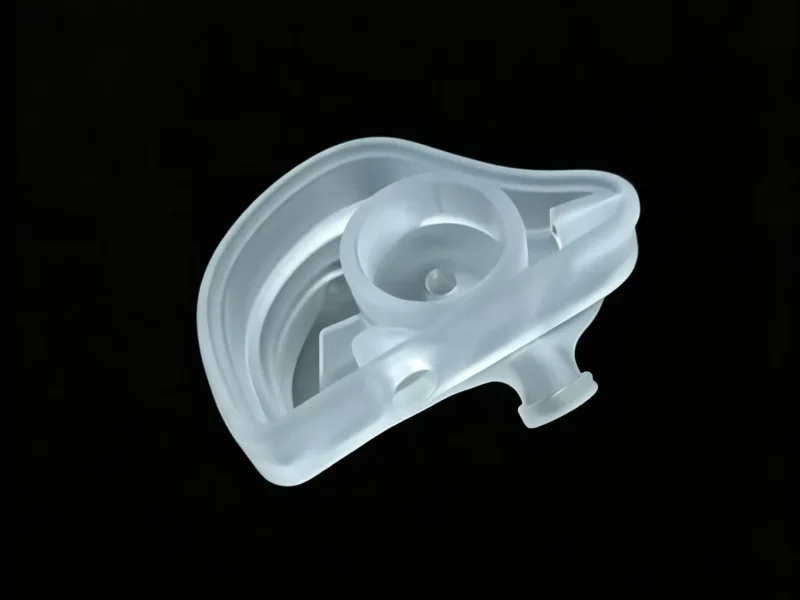
Industrial and professional work environments create noise and communication demands that consumer audio products cannot handle. Manufacturing floors, warehouses, and construction sites generate sustained noise across full shifts. Supervisors and crews need reliable communication that stays clear through this noise. We engineer industrial custom IEMs and communication earpieces specifically for this combination. They provide protection and communication together, unlike adapted consumer hardware.
Noise Exposure in Industrial and Professional Settings
Manufacturing plants, warehouses, and construction sites produce sustained noise from machinery, material handling, and vehicle traffic. This noise accumulates across eight- to twelve-hour shifts. Unlike brief or intermittent exposure, this cumulative effect drives hearing protection requirements in these environments.
Logistics and warehouse operations add forklift and conveyor noise to general facility sounds. Construction sites layer equipment noise, power tools, and vehicle activity into the environment. Crews still need to hear radio instructions clearly over this noise floor. Communication system integrators and safety gear distributors must specify equipment for sustained exposure. They need reliable communication under these conditions, not equipment validated only for short-duration use.
Protection vs. Communication: What Buyers Should Specify
Buyers sourcing for industrial environments need to separate two requirements before finalising a specification.
Passive protection covers noise attenuation through shell and tip design, relevant for personnel who need noise reduction without an active communication requirement — general floor staff, for example, working in high-noise zones without radio duties.
Communication capability covers integrated microphone and audio routing built to work with a plant’s existing radio or intercom system, relevant for supervisors, safety officers, and coordination staff who need clear two-way communication on top of noise protection.
Many roles require both at once. A shift supervisor needs noise attenuation from ambient facility noise and clear radio communication with floor staff and other supervisors simultaneously, which means the product has to be specified for both functions from the outset, not treated as a radio accessory with incidental noise reduction.
Explore our Industrial Custom IEMs for high-noise communication applications.
Universal-Fit Custom IEM Design for Industrial Use
This is universal-fit custom IEM design, engineered for consistent fit across a defined range of ear anatomy — not individual custom-moulded CIEMs built from personal ear impressions. Universal-fit design supports standardised production, predictable lead times, and consistent specification across a workforce.
For industrial buyers, this means you can order a batch of units in standard sizes (S/M/L) and achieve a reliable, repeatable fit for the majority of staff without the logistical overhead of taking individual ear moulds. It simplifies inventory management for safety managers and ensures that replacement units can be deployed immediately when needed.
Fit Stability Under Helmets, Headsets, and High Movement
Industrial environments often require personnel to wear additional headgear — hard hats, welding helmets, safety glasses, or over-ear hearing defenders. A poorly designed earpiece will shift, loosen, or become uncomfortable when a helmet strap is tightened over it.
Our industrial custom IEMs are shaped to sit flush against the ear, minimising interference with helmet straps and safety glasses. The shell geometry is optimised to lock into the concha and ear canal entrance, ensuring the unit stays secure during climbing, bending, or rapid head movements common on construction sites and warehouse floors.
Microphone, Cable, and Connector Considerations
In high-noise industrial settings, the microphone and cable are often the first points of failure if not specified correctly.
Microphone type: Boom microphones positioned near the mouth are preferred for noisy environments as they capture voice more clearly than inline or ear-mounted mics. Noise-cancelling microphone elements can further reduce ambient noise pickup, ensuring radio transmissions are intelligible.
Cable routing and material: Cable routing needs to account for helmet removal, harness routing, and movement patterns specific to the sport. Cable material needs to resist heat near engine bays, abrasion from harness contact, or repeated flexing from helmet removal cycles.
Connector type: The connector must match the team’s existing radio or intercom system — whether that’s a standard 3.5mm jack, a proprietary multi-pin connector, or a wireless receiver module. Specifying the correct connector from the start avoids the need for adapters that can introduce failure points.
OEM/ODM Customisation for Industrial Brands
For safety gear distributors, communication system integrators, and large industrial operators, we offer full OEM/ODM customisation.
We can develop custom shell shapes to match specific helmet models or headsets, integrate bespoke microphone placements, and tailor cable lengths and connector types to your exact specification. This allows you to offer a truly integrated communication solution to your clients, rather than forcing them to adapt generic consumer products.
Branding options such as custom colours and logo printing are also available, enabling you to create a cohesive and professional look for your teams or distribution channels.
Request OEM/ODM industrial custom IEMs for your brand, team, or distribution channel.
Q&A: Industrial Custom IEMs & Communication Earpieces
Q: What is the difference between universal-fit custom IEMs and custom-moulded CIEMs?
A: Universal-fit custom IEMs are manufactured in standard sizes (S/M/L) based on extensive ear canal data, providing a secure and comfortable fit for the majority of users without the need for individual ear impressions. Custom-moulded CIEMs, on the other hand, are made from a physical mould of a specific person’s ear. For industrial B2B applications, universal-fit is far more practical for equipping large teams.
Q: Can these IEMs be used with two-way radios?
A: Yes, they are specifically designed for this purpose. We can integrate various microphone types (boom, inline) and connectors to ensure seamless compatibility with major two-way radio brands and industrial intercom systems.
Q: What is the typical lead time for an OEM order?
A: Lead times vary depending on the complexity of the customisation and order volume. Standard universal-fit orders are typically fulfilled faster than full ODM projects requiring new tooling. Contact our sales team for a specific timeline based on your requirements.