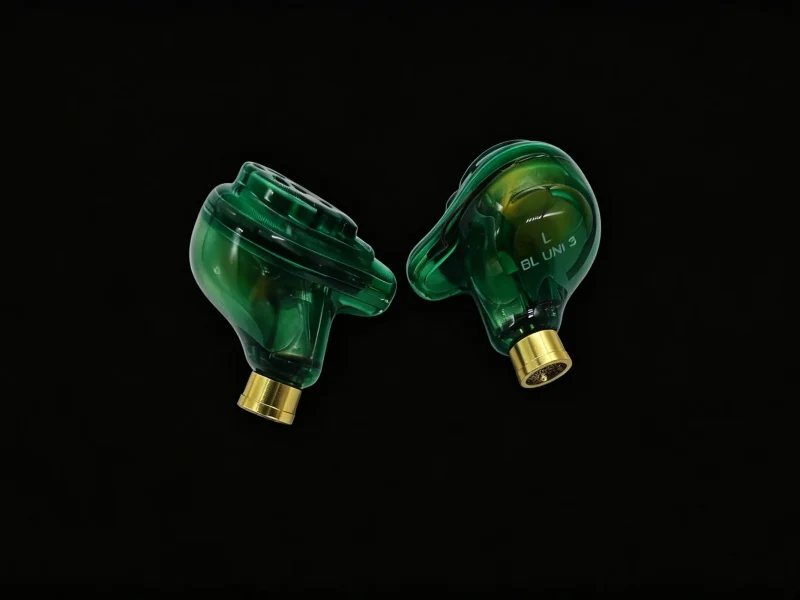
Many casual listeners, touring musicians, and studio engineers mix up common audio devices: standard earbuds, universal-fit in-ear monitors (IEMs), and fully custom in-ear monitors. Though all are portable audio tools, they differ drastically in internal structure, noise isolation, acoustic tuning, and applicable scenarios.
Especially for professional audio work, a custom in-ear monitor has fundamental advantages over mass-market consumer gear. Let’s break down the real differences.
Basic Definitions of the Three Audio Gear Types
1. Consumer Earbuds / TWS In-Ear Buds
Mass-produced, affordable silicone earpieces—including wired cheap buds and wireless TWS (True Wireless Stereo) earphones. Designed for daily commuting and short video playback, they are typically equipped with a single low-cost dynamic driver and tuned for heavy bass to suit pop music. The thin silicone tips only offer weak noise blocking, meaning sound details get distorted in loud environments, and they lack professional acoustic calibration for long-hour monitoring.
2. Universal-Fit In-Ear Monitors (IEMs)
The entry-level professional standard. These use pre-molded silicone or foam tips to fit a variety of ear shapes. They often feature multiple balanced armature (BA) drivers or hybrid setups, delivering far better sound separation than consumer earbuds. However, because they aren’t molded to your exact ear canal, they can sometimes suffer from minor sound leakage or fit issues during intense stage movement.
3. Custom In-Ear Monitors (CIEMs)
The gold standard for professional audio work. A custom in-ear monitor is molded from a precise physical impression of the user’s ear canal. Multi-balanced armature or hybrid driver arrays deliver precise frequency reproduction, while the deep, personalized insertion creates a strong physical noise seal. This makes the custom IEM the ultimate monitoring tool for touring musicians, recording engineers, and high-fidelity audiophiles.
Four Core Differences Explained
1. Noise Isolation Performance
- Consumer Earbuds: Only filter minor ambient noise. Audio details become fuzzy once you stay in crowded or loud spaces.
- Universal IEMs: Provide decent isolation with foam/silicone tips, but fit varies from person to person.
- Custom In-Ear Monitors: Form a perfect, sealed fit inside the ear canals, passively blocking over 25dB to 30dB of background noise. They are the only audio devices that maintain crystal-clear monitoring sound on noisy live stages and in recording studios.
2. Built-in Audio Drivers
- Consumer Earbuds: Limited by small shell size and low cost, they usually carry tiny, cheap single dynamic units.
- Custom IEMs: Support multiple independent balanced armature (BA) drivers or hybrid dynamic + BA crossover structures. Separate drivers handle low, mid, and high frequencies, delivering far better sound separation and detail resolution. Note: BA technology was originally developed for medical hearing aids, ensuring high sensitivity and detail at safe volumes.
3. Factory Tuning Characteristics
- Consumer Earbuds: Boost bass heavily to satisfy casual commuter listeners who stream pop tracks and short videos.
- Custom In-Ear Monitors: Feature flat, neutral tuning designed for accurate studio monitoring. Brands can adjust the sound signature according to clients’ personal demands to match live performance, mixing, and high-fidelity music appreciation.
4. Target Users & Wearing Comfort
- Consumer Earbuds: Use one-size universal shells, leading to sore ear canals during extended listening sessions. Suitable only for casual daily music fans.
- Custom IEMs: Provide a fully customized fit based on personal ear impressions. Musicians and audiophiles can wear a custom in-ear monitor for all-day performances or mixing work without discomfort or ear fatigue. (Read more about how custom fit prevents [Listening Fatigue] here.)
Scenario-Based Guide: Which One Do You Need?
Daily Commuting: Budget Earbuds Are Enough
If you only listen to pop music or watch videos on your way to work, affordable consumer earbuds are cost-effective. A custom in-ear monitor carries an extra premium with professional features that cannot be fully utilized for simple daily use.
Relaxed Home Listening: Universal IEMs Perform Well
For quiet indoor enjoyment, universal-fit IEMs offer a great balance of professional sound and convenience. Audiophiles chasing lossless high-fidelity tracks are the primary group that would choose them for home listening.
Live Stage & Recording Studio: Custom IEMs Are Mandatory
Loud stage backing tracks will cover vocal lines when using regular earphones or cheap earbuds, forcing performers to raise volume and risk permanent hearing damage. Custom in-ear monitors block chaotic background noise, separating vocals, drums, guitars, and keyboards clearly. They are also essential equipment for engineers to examine raw audio details during mixing. (Explore our [Custom IEM Collection] to find your perfect stage monitor.)
FAQ Section for Audio Professionals
Q1: Can consumer earbuds replace a custom in-ear monitor for live stage performance?
A: No. Low-grade earbuds lack sufficient noise isolation; loud stage music will mask vocals. Long exposure to high volume without proper noise blocking leads to hearing loss—a problem solved by a professional custom IEM’s dedicated stage design.
Q2: Do audiophiles need fully molded custom in-ear monitors?
A: Entry-level audiophiles can start with universal-fit professional IEMs. However, a fully molded custom IEM delivers superior comfort, stable noise isolation, and finer sound reproduction for enthusiasts with unique ear canal shapes and long daily listening hours.
Q3: Is there a big lifespan gap between the three devices?
A: Yes. Standard earbuds use thin plastic shells and basic cables that wear out quickly. Custom in-ear monitors adopt medical-grade resin housings and detachable, upgradeable audio cables, offering a much longer service life through easy cable replacement.
Guide:Blseeker 3-Driver Balanced IEM |Wireless In-Ear Monitoring Earbuds
How Solve Chronic Listening Fatigue for Musicians? Which IEM is best for a beginner audiophile?