Can Balanced Armature Driver Custom IEMs Solve Chronic Listening Fatigue for Musicians?
1: What Exactly Is Listening Fatigue, And Why Do Audio Professionals Suffer Most?
Many touring vocalists, studio recording engineers, and live sound crews struggle with unexplained mental exhaustion after a full day of audio work. This persistent drained feeling is widely known as listening fatigue—a state of mental burnout triggered by continuous high-load auditory processing.
Unlike casual listeners, audio industry practitioners wear monitoring devices for 6+ hours daily. When sound signals arrive distorted, unseparated, or over-loud, the human brain must devote extra cognitive energy to sorting frequencies, filtering ambient noise, and clarifying vocals. Over hours of constant overexertion, this extra mental labor evolves into obvious auditory exhaustion, bringing a string of negative physical and mental reactions.
3: What Hidden Symptoms Does Long-Term Auditory Fatigue Bring?
Prolonged exposure to unoptimized audio signals will gradually burden both mental state and physical health. Typical recognizable signs include:
-
- Persistent anxiety when working amid noisy stage environments.
-
- Unrelenting mental fog and overall tiredness after listening sessions.
-
- Easily triggered frustration and irritability during band communication.
-
- A tendency to avoid social events with loud background sound.
-
- Gradual decline in sleep quality and long-term physical vitality.
-
- Severe professional burnout for full-time music industry workers.
For artists relying on stable auditory perception for their career, these symptoms do not merely affect daily mood—they damage performance stability and shorten professional service life.
4: How Damaged Inner Ear Hair Cells & Low-Grade Gear Worsen Auditory Strain
To understand how custom monitors ease listening pressure, we must first clarify the biological root of fatigue. Tiny sensory hair cells inside the inner ear undertake frequency conversion work: each cell translates a unique sound pitch into electrical signals transmitted to the brain’s auditory nerve.
Once these hair cells sustain damage from loud, chaotic sound, the auditory system loses its natural frequency resolution capacity. Budget single-driver earphones exacerbate this issue severely: all bass, mid, and treble frequencies blend through one single unit, creating muddy vocals, harsh high-frequency distortion, and bloated low ends. Faced with muddled audio, the brain has to fill missing frequency details independently. This extra cognitive load is the core trigger of listening fatigue that plagues most performers.
5: Why Balanced Armature (BA) Technology Is the Medical-Grade Solution
High-performance custom IEMs built with Balanced Armature (BA) drivers fundamentally reduce unnecessary auditory strain, solving fatigue at its source. Originally developed for medical hearing aids and now the gold standard in professional stage monitoring, BA technology operates on a completely different mechanical principle than traditional dynamic drivers.
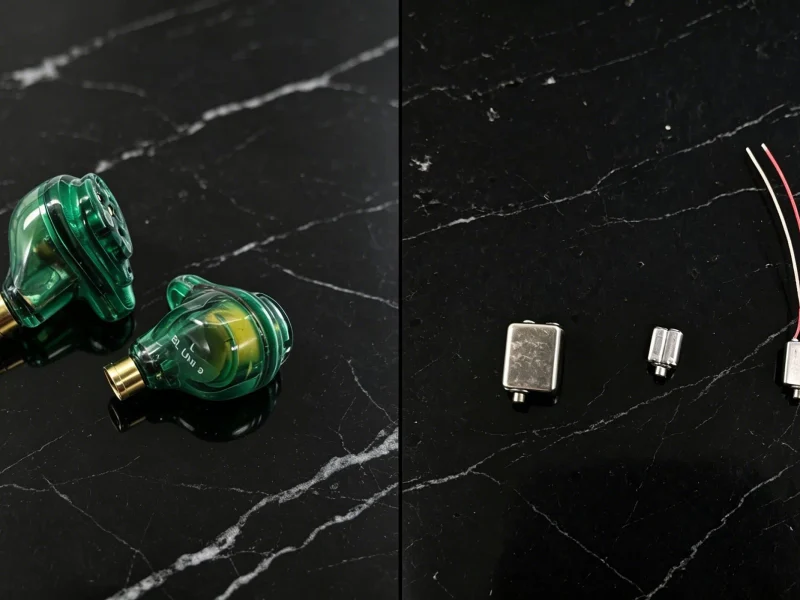
Instead of moving a heavy cone, a BA driver uses a tiny, balanced armature suspended in a magnetic field to drive a micro-diaphragm via a precision transfer pin. This medical-grade engineering offers three distinct advantages against listening fatigue:
A. Superior Transient Response and Detail Retrieval
Because the moving mass inside a BA driver is incredibly small, it can start and stop almost instantly. This lightning-fast transient response means the brain receives crisp, highly detailed audio signals without having to “guess” or over-process muddy frequencies, drastically cutting cognitive consumption during long monitoring sessions.
B. High Sensitivity for Safer, Lower Volumes
BA drivers are highly efficient, requiring very little electrical power to produce clear sound. Combined with the acoustic seal of a custom earpiece, musicians can hear every nuance of their mix at significantly lower, safer volumes. This prevents the inner ear hair cells from being overstimulated by excessive sound pressure, directly protecting long-term hearing health.
C. Exceptional Passive Noise Isolation
Custom IEMs utilizing BA technology are designed to fit the exact geometry of the user’s ear canal, creating a near-perfect acoustic seal. This physical barrier passively blocks out 25dB to 30dB of ambient stage noise and studio hum. Less external interference means the brain spends far less energy filtering irrelevant sound.
6: The Reality of BA Tuning: Precision Over Hype
While Balanced Armature technology is undeniably superior for reducing auditory strain, it is not a magic bullet. Because BA drivers are highly sensitive and physically small, they can sometimes produce a sterile, overly clinical sound or exhibit phase coherence issues if not engineered correctly.
This is why precision acoustic tuning and crossover design are non-negotiable. Premium manufacturers must carefully calibrate the acoustic dampening and electrical crossovers to ensure that the transition between frequency bands is seamless. When properly tuned, a BA custom IEM avoids harsh treble spikes and delivers a smooth, natural sound signature that eliminates the piercing distortion which causes instant ear soreness and mental tiredness.
7: Complementary Practical Habits To Alleviate Listening Fatigue
Even with premium BA custom in-ear monitors, these small daily adjustments further lower auditory pressure after lengthy audio work:
-
- Step into quiet spaces for 15–30 minutes after long listening work to rest ears and the auditory nervous system.
-
- Use deep breathing to relieve anxiety and mental fog caused by severe auditory exhaustion.
-
- Speak up promptly if monitor mixes or venue sound levels create uncomfortable listening strain.
-
- Prioritize written text communication over verbal dialogue to give your auditory system short breaks.
-
- Consult professional audiologists to set exclusive monitor tuning modes for noisy performance venues.
-
- Choose modular BA IEMs with swappable tuning filters to adjust sound signatures for different performance environments.
8: Final Insight – BA Custom IEMs Are A Sustainable Fix For Listening Fatigue
Listening burnout is not an inevitable cost of working in the music industry. Most chronic auditory strain stems from low-quality audio gear that forces the brain into constant overprocessing.
Custom Balanced Armature in-ear monitors resolve the core pain point: leveraging medical-grade acoustic precision to deliver clean frequency separation, safe low-volume detail reproduction, suppressed ambient interference, and distortion-free audio output. This greatly lightens the brain’s auditory processing burden.
For audio retail store owners, recording studio operators, and hearing care clinic partners seeking long-term comfortable listening solutions, finely tuned OEM BA custom IEMs stand out as the most professional choice to avoid persistent listening fatigue and protect long-term auditory health.