The custom IEM category is shifting away from its traditional foundation of wired, single-driver designs. For years, the product architecture remained stable. Now, it branches into multiple technical directions simultaneously. These include hybrid driver systems, wireless configurations, active noise cancelling, and early sensor integration. None of these directions replace the others outright. Instead, they expand the definition of a “custom IEM.” They do this at a pace that product planning cycles must account for.
For brand owners and OEM/ODM buyers, this is a planning problem, not just a curiosity. Relying solely on current-generation orders creates a risk. Your roadmap could become technically outdated before it even reaches the market. This is especially true for brands in the mid-to-premium tier. Instead of focusing on a single production cycle, you should plan with a 2–5 year window. This approach is much more realistic for this category.
Hybrid Driver Systems: More Than Stacking Components
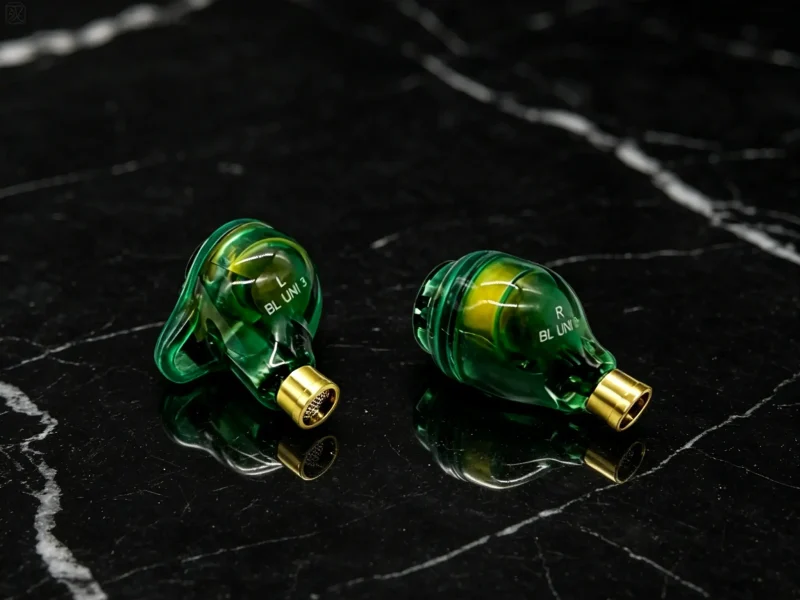
The move toward hybrid driver custom IEM designs reflects a genuine engineering shift. It is not just a specification upgrade for marketing purposes. These designs combine dynamic drivers with balanced armatures. Some even mix balanced armatures with planar drivers across multiple units.
The appeal is straightforward: different driver types handle different portions of the frequency range. A dynamic driver typically contributes low-frequency weight and a natural sense of air movement. Balanced armatures, on the other hand, offer precision in the midrange and treble. Combining them allows a design to draw on the strengths of each.
In practice, this is where the difficulty concentrates. Adding drivers increases the burden on crossover design. Poorly implemented crossover points introduce dips or peaks. A single-driver design never has to manage this. Acoustic chamber structure becomes more complex, as multiple drivers compete for limited internal space. This affects both fit and sound. Production consistency also becomes harder to maintain across a full manufacturing run. More components mean more variables. Each unit must stay within strict tolerance.
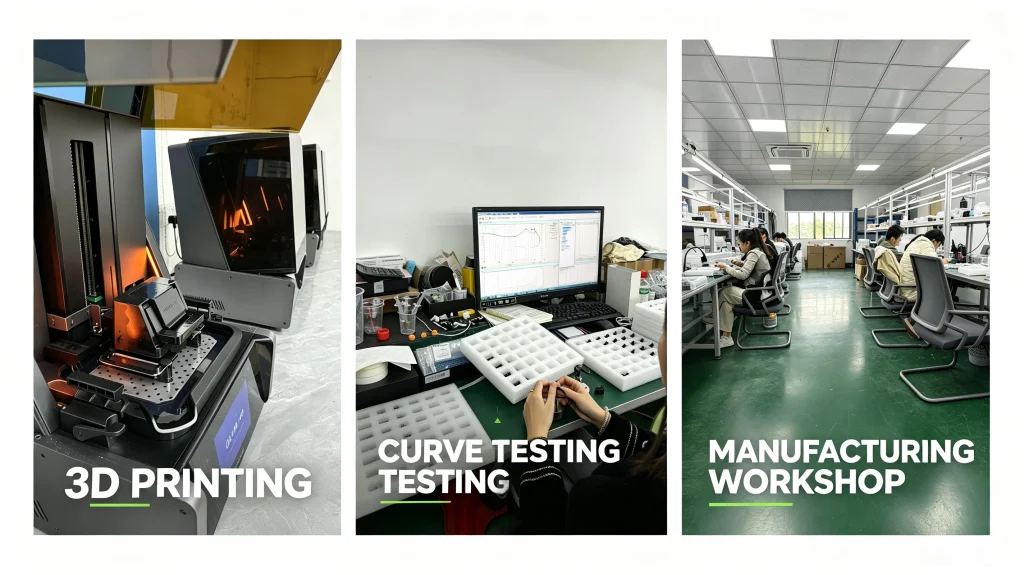
From an OEM standpoint, this is the central point worth emphasizing: hybrid driver configurations are not simply about adding more components to a spec sheet. They require system-level tuning capability. If you want to see how we manage complex driver arrays effectively within a custom shell, check out our[Premium Hybrid Custom IEM Series], It demonstrates precise crossover integration and acoustic balancing. A factory capable of producing a hybrid prototype is not automatically capable of reproducing that tuning consistently across a production order.
Wireless and True Wireless Custom IEMs
Wireless custom IEM OEM development represents one of the more commercially interesting directions in the category, but it is also one of the more technically demanding.
Designers engineer standard true wireless earbuds around generous, standardized housing shapes. This gives them reasonable room for batteries, Bluetooth modules, and antennas. Custom IEMs face a different constraint: ear anatomy and acoustic chamber requirements dictate the shell geometry, not the convenient space for electronics. This creates a genuine design conflict. Every millimeter allocated to a battery or wireless module is a millimeter taken away from driver placement or acoustic tuning, and vice versa.
Several specific challenges follow from this. Custom ear molds vary meaningfully from one user to another, meaning internal component placement has to be adaptable rather than fixed. Fit stability becomes more complex when a heavier wireless module is involved. Battery capacity, Bluetooth module selection, and antenna design all need to be balanced against limited internal volume.
To see how these spatial constraints are solved in mass production, explore our [Wireless Custom IEM Solutions], featuring optimized battery placement and stable Bluetooth connectivity designed specifically for custom molds. None of these constraints are unsolvable, but they are why wireless custom IEM development tends to require a longer engineering runway than a comparable wired product.
Conclusion
The direction of the custom IEM category is reasonably clear, even if the timeline for full maturity is not. Next-gen in-ear monitor technology will be defined less by incremental sound quality improvements and more by how modular, scenario-specific, and technically integrated they become.
For brands evaluating where to invest next, the more useful exercise is less about picking a single trend to bet on and more about assessing a manufacturing partner’s underlying R&D depth. That evaluation, more than any single feature, is likely to determine which brands are positioned well when these trends move from early-stage to production-standard.
Q: Is it difficult to integrate ANC into a custom IEM shell compared to standard TWS?
A: Yes. Unlike standard TWS earbuds with standardized housings, custom IEM shells vary in geometry based on ear anatomy. This makes microphone placement and seal integrity—critical for ANC performance—much harder to standardize. It requires a factory with advanced acoustic testing capabilities to ensure consistent noise cancellation across different shell sizes.
Q: Are smart sensors in IEMs ready for mass production?
A: Currently, sensor integration (like heart rate or motion tracking) is still in an exploratory phase for custom IEMs. The main challenges are power consumption and space constraints within the small custom shell. While prototypes exist, brands should treat this as a future roadmap item rather than an immediate mass-production standard due to yield and battery life trade-offs.
Q: Why do hybrid driver IEMs require more R&D from the factory?
A: Hybrid designs combine different driver types (e.g., Dynamic + BA), which have distinct impedance and frequency responses. Designing a crossover that blends them seamlessly without phase issues requires sophisticated simulation and tuning. Furthermore, fitting multiple drivers into a custom shell without compromising acoustics demands precise 3D modeling and assembly expertise.
How to Choose a Reliable IEM Supplier in China: Factory Audit Checklist
IEM White Label vs. Private Label OEM for Audio Brands