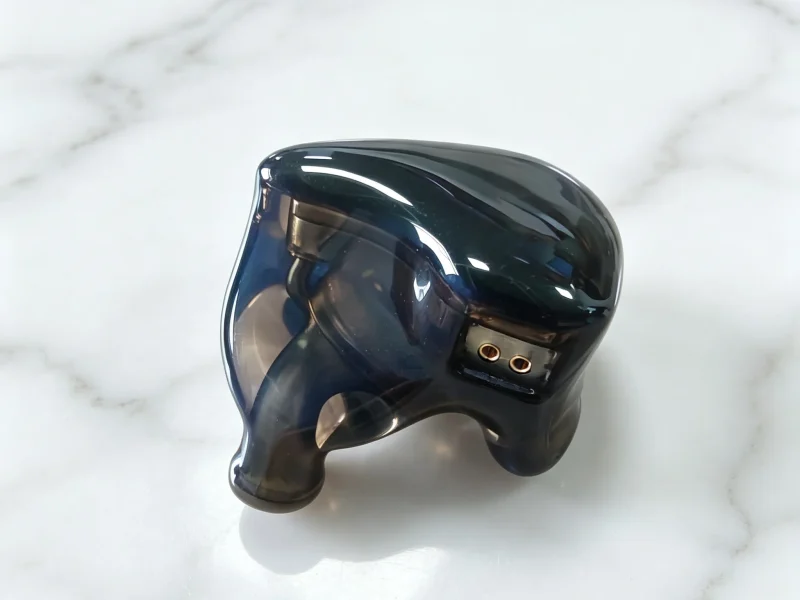
China is the world’s leading production base for in-ear monitors. It offers a unique mix of manufacturing capacity, customization, and cost efficiency. For overseas brands and distributors, this makes sourcing from an IEM supplier China partner a logical starting point. Whether you are planning a new product line or an OEM partnership, the opportunities here are vast.
However, supplier quality varies enormously. Buyers often struggle to distinguish direct factories from trading companies posing as manufacturers. Quality control practices can also differ sharply. Sometimes, defects only become apparent after a bad batch is already produced. Reliable OEM sourcing depends less on luck. It requires a structured evaluation process. This article provides a practical factory audit checklist to help you screen suppliers methodically.
Clarify Needs First: Factory vs. Trading Company
Before evaluating any specific supplier, it’s essential to understand which type of business you’re actually dealing with. This single distinction affects nearly everything about the partnership that follows.
A genuine custom IEM factory vs trading company comparison reveals core differences. A direct factory owns its production equipment. It also has in-house R&D and tuning capabilities. This means customization requests are handled internally. Response times are faster, and cost structures are transparent because there is no intermediary markup.
For buyers pursuing genuinely custom IEM development, working with a direct factory is usually better. This applies if you need specific tuning, exclusive shell designs, or branded packaging. A direct IEM supplier China relationship ensures faster sample iteration. It also offers clearer accountability when issues arise. Finally, pricing reflects actual production costs rather than hidden trading margins.
From Paperwork to Production Line
Once you’ve confirmed you’re evaluating an actual factory, the focus must shift from documents to physical capabilities. While basic business licenses are standard, the real differentiator for a custom IEM partner lies in their production environment and technical setup. Don’t rely solely on what they send you via email; you need to verify their operational reality.
Practical Factory Audit Checklist
This is the section that matters most in practice. Whether conducted through an in-person visit, a live video walkthrough, or a third-party audit service, evaluate suppliers against the following dimensions:
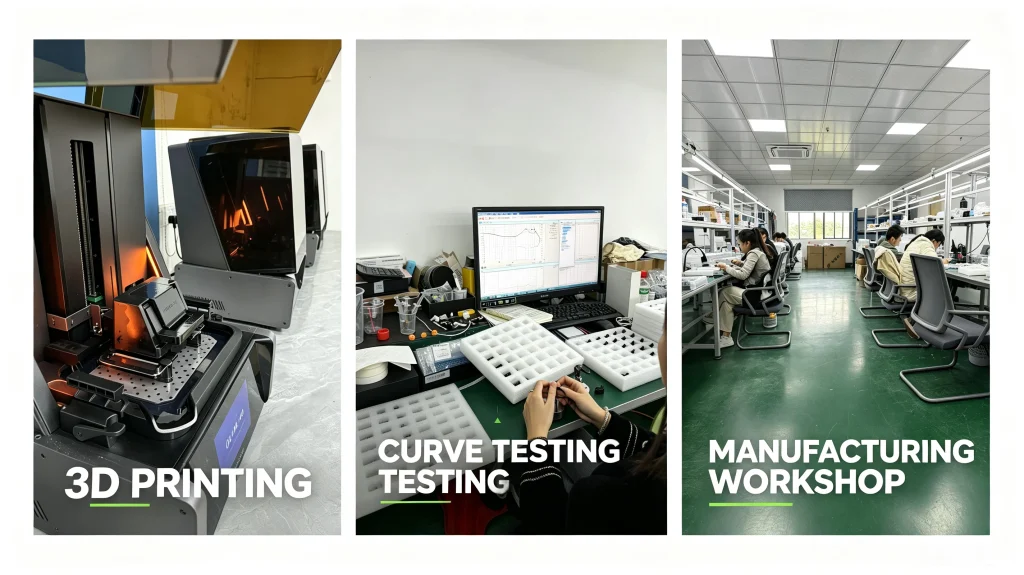
1. Production Workshop Environment
- Is the facility clean, organized, and appropriately climate-controlled? Dust and humidity control matter significantly for driver assembly and shell bonding quality.
- Are workstations clearly organized by production stage, with visible workflow logic rather than disorganized, ad hoc processes?
2. Production Equipment Precision
- Does the factory use CNC machining, precision molding, or 3D printing equipment appropriate to the shell materials they claim to offer?
- Is acoustic testing equipment present on-site, such as artificial ear couplers or impedance/sensitivity testers?
If you are looking for specific examples of high-fidelity audio performance, check out our latest [High-Resolution Hybrid Driver IEM Model X1] to see what modern manufacturing precision can achieve.
3. R&D Team Capability
- Does the factory have an in-house acoustic engineering team capable of custom driver selection, crossover design, and target curve tuning — not just an assembly line that installs pre-configured drivers?
- Can they demonstrate previous custom projects with measurable tuning outcomes, not just marketing images?
4. Quality Control Process
This is the core of quality control for custom IEM evaluation, and it should be assessed at every production stage:
- Raw material inspection: Are incoming drivers, cables, and shell components checked against specification before entering assembly?
- In-production sampling: Are units checked at intermediate assembly stages, not only after the product is fully built?
- Finished product testing: Is every unit — or a statistically valid sample of every batch — tested for frequency response, channel matching, and physical defects before packing?
A useful cautionary example illustrates why this checklist matters: a mid-sized audio brand once proceeded with a supplier based solely on sample quality and price, skipping a review of the factory’s production-stage QC process. The first bulk order arrived with inconsistent left-right channel balance across a meaningful percentage of units — a problem that a basic in-production sampling check would have caught before shipment. The lesson is straightforward: sample quality alone does not guarantee batch consistency, and the QC process itself needs direct evaluation.
For brands requiring strict consistency, our [Professional Stage Monitor IEM Series Pro] undergoes this exact rigorous testing protocol.
5. Supply Chain Management and Delivery Control
- Does the factory source key components (drivers, cables, connectors) from established, traceable suppliers, or from unverified sources with inconsistent quality?
- Can they provide realistic, historically consistent lead times, rather than unusually optimistic delivery promises that often signal capacity overstatement?
Cooperation Details and Risk Avoidance
Beyond the factory audit itself, several cooperation details are worth clarifying before placing an order:
- Customization process and sample confirmation: Establish a clear approval workflow, including how many sample rounds are included before mass production and what happens if the first sample doesn’t meet the target specification.
- Quotation transparency: Confirm whether quoted pricing includes tooling or NRE fees, packaging customization, freight, and applicable taxes — vague quotations that exclude these costs often lead to unexpected charges later.
- After-sales guarantee: Clarify defect rate thresholds, replacement or rework policies, and how warranty claims on finished goods are handled after delivery.
- Contract terms: Ensure IP ownership, minimum order quantities, payment terms, and delivery timelines are documented in a signed agreement, not left as informal verbal understandings.
These details rarely surface during an initial sales conversation, but they become critical the moment something doesn’t go exactly as planned — which is precisely when a vague agreement causes the most damage.
Frequently Asked Questions (FAQ)
Q: What is the Minimum Order Quantity (MOQ) for custom IEMs?
A: Our standard MOQ for custom projects starts at just 200 pairs, making it accessible for growing audio brands to launch new lines without excessive inventory risk.
Q: Do you support sample customization and testing?
A: Yes, we fully support sample customization. We encourage clients to test samples rigorously to ensure the tuning and fit meet their exact standards before mass production.
Q: Can you adjust the audio tuning based on specific target curves?
A: Absolutely. We support providing audio curves for separate audio adjustments. Whether you prefer a Harman target or a unique signature, our engineers can tune the drivers to match your specific frequency response requirements.
Q: Do you offer structural design services for new shells?
A: Yes, we support 3D content structure design planning. If you have a concept or a specific ergonomic requirement, our R&D team can help model and engineer the shell structure from scratch.